
EU Responsible Person at customs: what happens without one

9 min read
No EU Responsible Person for your product? What customs and market surveillance authorities can do, how long a hold lasts and what changes in 2027.
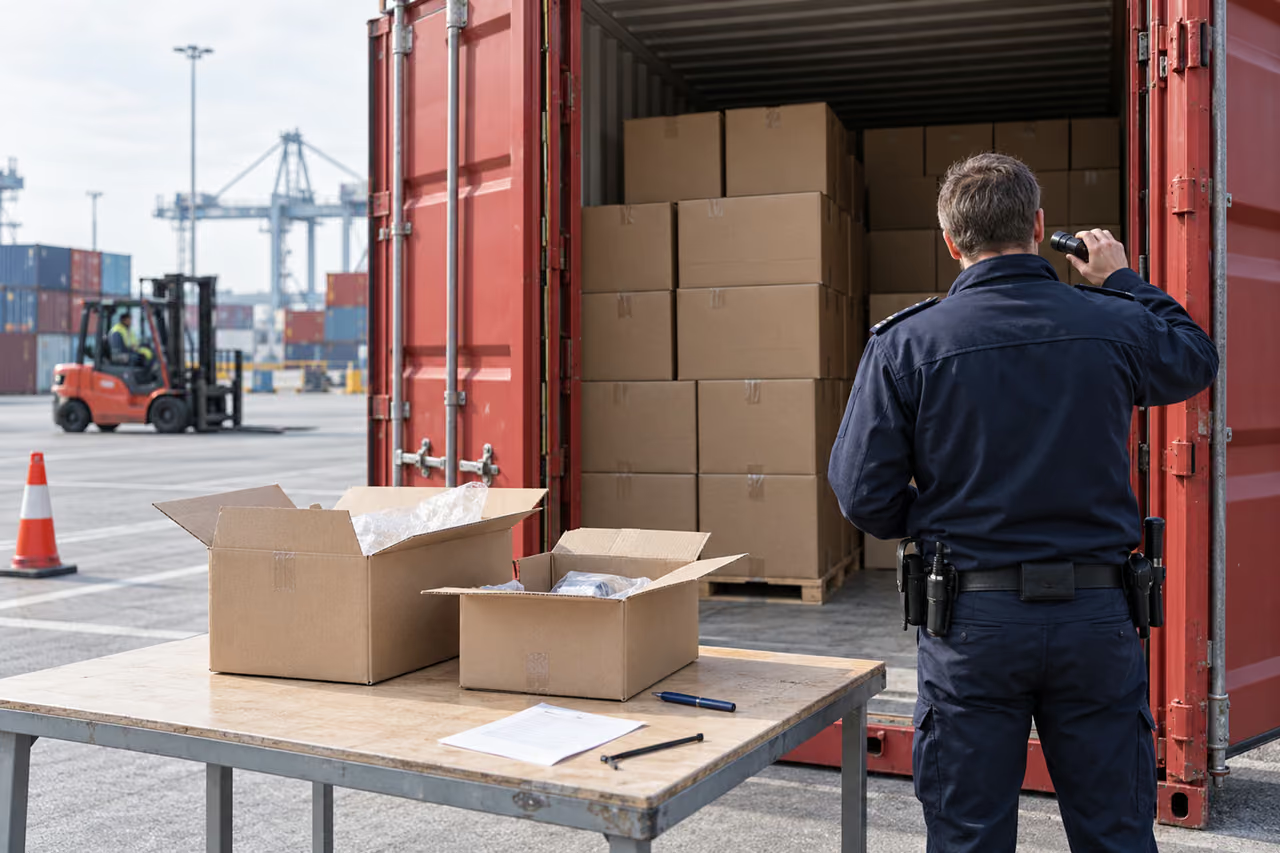
Your next shipment reaches an EU border, or a market surveillance authority asks about a product you sell online. Either way, someone in the EU has to answer and produce the documents. If your products have no EU Responsible Person, customs and authorities have defined tools: a risk-based check, a suspended release, four working days for the authority to react, a refusal and, for products that present a risk, destruction. Here is the realistic chain, and what changes on 21 September 2027.
Why customs ask for your EU Responsible Person
For CE-marked products under the acts listed in Article 4(5) of Regulation (EU) 2019/1020 (opens in a new tab), such as the EMC, low voltage, radio equipment and toy safety directives, Article 4(1) has required an economic operator established in the EU since 16 July 2021. For other consumer products, Article 16(1) of the General Product Safety Regulation (EU) 2023/988 (opens in a new tab) (GPSR) extends the rule. Without that operator, the product may not be placed on the market.
Four operators qualify: an EU manufacturer, an importer, an Authorized Representative with a written mandate or, as a fallback, a fulfillment service provider (Article 4(2); who can take the role). The operator's name and postal address go on the product, packaging, parcel or an accompanying document (Article 4(4)); for GPSR products, an electronic address as well (Article 16(3) GPSR).
How a customs hold works, step by step
Border controls (Articles 25 to 28 of Regulation (EU) 2019/1020) cover products under Union law, GPSR products included (Article 2(2); recital 62 GPSR).
- Risk-based selection. Customs select goods declared for release for free circulation, the procedure that admits them to the EU market, by risk analysis (Article 25(3)). In 2025, the EU control rate was 65 items per million imported, and fewer than 10 per million were refused (European Commission, 20 July 2026 (opens in a new tab)).
- Suspension. If a check establishes a ground in Article 26(1), customs must suspend release and notify the market surveillance authority (Article 26(2)). The grounds: missing or doubtful documents (a), labeling not as Union law requires (b), a false or misleading CE marking (c), missing EU operator details under Article 4(4) (d), or other cause to believe the product does not comply or presents a serious risk (e).
- Four working days. If the authority has not asked to maintain the suspension within four working days, or approves release, the goods are released, provided all other formalities are met (Article 27).
- Refusal. If the authority concludes that the product does not comply or presents a serious risk, it prohibits placing it on the market and customs refuse release, with a notice in the customs system (Article 28(1) and (2)).
- Destruction or return. Customs may destroy a product that presents a risk to the health and safety of end users where necessary and proportionate, at the declarant's cost (Article 28(4)). Other refused goods can be sent back under another customs procedure unless the authority objects (Article 28(3)), or customs dispose of them (Article 198 of Regulation (EU) No 952/2013).
Ground (d) applies only to products under the acts listed in Article 4(5). For them, an entry in the customs declaration does not count (Commission guidelines on Article 4 (opens in a new tab), section 2.3). For a GPSR-only product, missing Responsible Person details (Article 16(3) GPSR) can fall under point (b) or (e) instead.
The four working days are the authority's deadline to ask for a longer hold, not to decide. If it wants documents, your EU operator must provide them on a reasoned request (Article 4(3)(b)). Without one, there is nobody in the EU to ask.
What market surveillance authorities can do after release
Most parcels are never checked. On the market, Articles 14 and 16 of Regulation (EU) 2019/1020 apply, for GPSR products through Article 23(1) GPSR:
- Corrective action and bans: authorities can require documents, buy samples and order the operator to end the non-compliance; if nothing happens, they ensure withdrawal, recall or a sales ban (Articles 14(4) and 16(2) to (5)).
- Online offers: a listing must name the Responsible Person (Article 19(b) GPSR); marketplaces must act on an order to remove an offer of a dangerous product within two working days (Article 22(4) GPSR).
Fines are national (Article 41 of Regulation (EU) 2019/1020, Article 44 GPSR; see GPSR penalties). Without an EU operator, authorities act on what they can reach: the goods, the marketplace and the listing.
What changes on 21 September 2027
The new Union Customs Code, Regulation (EU) 2026/2108 (opens in a new tab), applies in general from 21 September 2027 (Article 287(2)). For a missing EU operator, three points matter:
- Your operator becomes release data. Release data must include the responsible economic operator under Article 4 of Regulation (EU) 2019/1020 and Article 16 GPSR (Article 109(3)(a)), and compliance with the product rules customs apply is a condition for release (Article 109(3)(e)).
- Clear outcomes. Customs refuse release on evidence of non-compliance (Article 77(4)(b)). After a suspension, they release if the other authority does not reply within the product law's time limit, and keep a suspension for at most 90 days if it needs more time (Article 77(6)).
- Systematic failures cost more. If the importer for distance sales, the seller or the facilitating platform (Article 5(14)), systematically breaches customs obligations such as complete data or product compliance (Articles 27(2) and 274(1)), the customs penalty must include a charge of 1% to 4% of the value of its imports in the previous 12 months; continued breaches can lead to the suspension of all its goods for at least six months (Articles 276 and 77(5)).
On why the importer for distance sales is not your EU operator, see our article on the customs reform.
Example: a U.S. maker of camping gear
A U.S. company ships a rechargeable LED lantern and a folding camping chair from its own online shop directly to consumers in Germany. It has appointed nobody in the EU. Customs check one consignment:
| Product | EU rules | Ground under Regulation (EU) 2019/1020 |
|---|---|---|
| LED lantern with USB charging | EMC Directive 2014/30/EU and other acts listed in Article 4(5) | No EU operator details: Article 26(1)(d) |
| Folding camping chair | GPSR only | No Responsible Person details: Article 26(1)(b) or (e) |
The authority may let these parcels go, but every later consignment has the same gap, and nobody in the EU can produce the lantern's Declaration of Conformity. If it concludes that the products may not be placed on the market, release is refused (Article 28(2)).
The fix covers both products: one Authorized Representative with a written mandate (Article 4 guidelines, Box 1, step 6; Article 16(1) GPSR), its details on the packaging or parcel, and access to the technical documentation.
Five steps so that someone in the EU can answer
- Classify each product: covered by an act listed in Article 4(5), or GPSR only.
- Appoint one EU economic operator before the first shipment, with a written mandate if it is an Authorized Representative (Article 4(2)(c)); importer or representative depends on your sales model.
- Label before shipping: on the product, packaging, parcel or an accompanying document (where each detail goes).
- Make documents reachable: Declaration of Conformity and technical documentation, in a language the authority easily understands (Article 4(3)(a) and (b)).
- Prepare for 2027: give your marketplace, carrier or customs representative your EU operator's identity (Article 109(3)(a) of Regulation (EU) 2026/2108).
Common mistakes about customs and a missing EU operator
- Expecting every shipment to be stopped. Controls are risk-based (Article 25(3)). Most parcels pass, which does not make the product legal (Article 4(1), Article 16(1) GPSR).
- Expecting destruction for a missing address. A product that is only non-compliant is refused release (Article 28(2)); destruction under Article 28(4) requires a risk to health and safety.
- Thinking only an Authorized Representative qualifies. Article 4(2) also allows an EU manufacturer, an importer or, as a fallback, a fulfillment service provider.
Conclusion: the question is who answers
A missing EU operator rarely stops every parcel. It means that when customs or an authority ask, nobody in the EU can answer, and a short delay becomes a refusal, a ban or a removed listing.
Representa acts as your GPSR Responsible Person or EU Authorized Representative by written mandate: our name and address go on your packaging, we keep your technical documentation for 10 years and handle authority inquiries within the agreed scope and mandate (market surveillance support). Customs clearance stays with your carrier, marketplace or customs representative; Representa does not handle it.
Frequently asked questions
Can EU customs destroy my goods if there is no EU Responsible Person?
Customs may destroy a product that presents a risk to the health and safety of end users, where necessary and proportionate, at the declarant's cost (Article 28(4) of Regulation (EU) 2019/1020). A product that is only non-compliant is refused release (Article 28(2)) and can be sent back unless the authority objects (Article 28(3)); otherwise customs dispose of it.
How long can customs hold a shipment for product safety reasons?
Goods are released if the market surveillance authority has not asked to maintain the suspension within four working days and all other formalities are met (Article 27 of Regulation (EU) 2019/1020). From 21 September 2027, a suspension can be maintained for no longer than 90 days when the authority needs more time (Article 77(6) of Regulation (EU) 2026/2108).
Do customs check the Responsible Person for GPSR products?
They can. Customs controls under Articles 25 to 28 of Regulation (EU) 2019/1020 cover products under Union law, GPSR products included (Article 2(2)). The explicit ground for missing operator details, Article 26(1)(d), applies to products under Article 4(5); for GPSR-only products, customs can rely on missing labeling (b) or other cause to believe the product does not comply (e).
Is my marketplace or customs broker my EU economic operator?
Not by handling customs. The operator must be an EU manufacturer, an importer, an Authorized Representative with a written mandate or, as a fallback, a fulfillment service provider for the products it handles (Article 4(2) of Regulation (EU) 2019/1020). The new Customs Code lists it separately from the importer (Article 109(3)(a) of Regulation (EU) 2026/2108).
Does release by customs mean my product complies?
No. Release for free circulation is not proof of conformity (Article 27 of Regulation (EU) 2019/1020), and the new Customs Code repeats this (Article 77(2) of Regulation (EU) 2026/2108). Authorities can still check the product later and require corrective action, withdrawal or recall.