UKCA or CE marking: what Great Britain accepts

10 min read
UKCA or CE marking: where Great Britain accepts CE without an end date, when UKCA is required, why Northern Ireland differs and what changes for machinery.
You make electrical products, toys or machinery outside Europe and already carry the CE marking for the EU. Now a distributor in England asks whether you need the British UKCA marking, and a retailer in Belfast wants the same stock. For most products, the answer is no: Great Britain accepts CE without an end date. This guide to UKCA or CE marking shows where CE is enough, when UKCA is required, why Northern Ireland differs and what changes for machinery on 20 January 2027.
What Great Britain accepts since October 2024
UKCA (UK Conformity Assessed) is the marking the UK introduced after Brexit for Great Britain: England, Scotland and Wales. Originally, Great Britain was to stop accepting CE at the end of 2024. The Product Safety and Metrology etc. (Amendment) Regulations 2024 (opens in a new tab) (SI 2024/696), in force since 1 October 2024, removed that end date for 21 sets of product regulations (explanatory memorandum (opens in a new tab), paragraphs 4.1 and 4.2).
They include electrical equipment, electromagnetic compatibility (EMC), restrictions on hazardous substances (RoHS), radio equipment, toys, machinery, personal protective equipment, gas appliances and pressure equipment. For each, the government's sector table (opens in a new tab) lets businesses choose UKCA or CE. "Without an end date" does not mean forever: the government may still make UKCA mandatory for individual regulations (memorandum, paragraphs 5.7 and 5.11).
UKCA or CE marking compared: EU, Great Britain, Northern Ireland
How the three markets treat a product under CE rules:
| Topic | EU | Great Britain | Northern Ireland |
|---|---|---|---|
| Accepted marking | CE, the only marking attesting EU conformity (Art. 30(4) Regulation (EC) No 765/2008) | UKCA or CE in most sectors (SI 2024/696) | CE, or CE plus UKNI; not UKCA |
| Third-party certificate | EU notified body only (Blue Guide 2.9.5.2) | EU notified body: CE or UKCA; UK Approved Body: UKCA only | EU notified body: CE; notified body based in the UK: CE plus UKNI |
| Machinery from 20 January 2027 | Regulation (EU) 2023/1230 | CE under Regulation (EU) 2023/1230 (SI 2026/867), or UKCA | Regulation (EU) 2023/1230 applies directly |
| Instructions | Language set by each member state | English | English |
Where Great Britain follows its own rules
Check these sectors separately:
- Medical devices: CE is accepted until 30 June 2028 or 30 June 2030 at the latest, depending on the EU rules met; after that, UKCA applies unless the rules change (MHRA guidance (opens in a new tab)). A consultation on indefinite recognition closed on 10 April 2026; as of 5 October 2026, no response had been published.
- Construction products: CE stays recognized under separate rules, since 8 January 2026 also under the new EU Construction Products Regulation (SI 2025/1172 (opens in a new tab)); the government has committed to a transition of at least two years for any change (sector table).
- Ecodesign: since 27 July 2026, CE also covers energy-related products regulated under the EU Ecodesign for Sustainable Products Regulation, if they meet British ecodesign requirements (SI 2026/750 (opens in a new tab)).
- Own British marks: Red Ensign for marine equipment, Rho for transportable pressure equipment, UK class marks for drones; batteries need no conformity marking in Great Britain.
When UKCA is the only option, and when you may choose it
UKCA is mandatory in Great Britain in three situations:
- A UK Approved Body certifies your product. Its certificates support UKCA only; CE needs an EU notified body (gov.uk guidance for Great Britain (opens in a new tab), section 4).
- Your sector is not, or no longer, recognized, as for medical devices after the dates above.
- The UK makes UKCA mandatory for a regulation. gov.uk describes this only as a hypothetical example.
Fast-Track UKCA is the optional reverse route: you may affix UKCA on the basis of EU requirements and EU conformity assessment and mix British and EU routes where several regulations apply (Fast-Track UKCA guidance (opens in a new tab)). This helps when a British customer insists on UKCA.
Northern Ireland: CE, or CE plus UKNI
Under the Windsor Framework, EU product rules apply in Northern Ireland, so the CE marking does too. UKNI is never used on its own: it goes next to CE when a notified body based in the UK has carried out a mandatory third-party assessment. Such certificates are valid only in Northern Ireland, not in the EU (Commission Blue Guide 2022, section 2.9.6). A product marked only with UKCA cannot be sold in Northern Ireland.
Qualifying Northern Ireland goods may also be sold in Great Britain with these markings (gov.uk guidance for Northern Ireland (opens in a new tab), section 1). Who must be established where is covered in GPSR in Northern Ireland, not in Great Britain.
Machinery from 20 January 2027: Great Britain follows the EU Regulation
On 20 January 2027, the Machinery Regulation (EU) 2023/1230 (opens in a new tab) replaces the Machinery Directive in the EU and applies directly in Northern Ireland. For Great Britain, SI 2026/867 (opens in a new tab), made on 22 July 2026, recognizes CE under the new Regulation from the same day (new regulation 12A of the Supply of Machinery (Safety) Regulations 2008), provided that, among other things:
- technical documentation and the EU declaration of conformity are in or translated into English and kept available for at least 10 years;
- the declaration accompanies the machinery or is accessible via an internet address or machine-readable code;
- instructions for use are in English;
- machinery in Annex I, Part B built to EU standards without a British designated standard covering all requirements goes through a notified body procedure under Article 25(2).
Machinery placed on the market in Great Britain, Northern Ireland or the EU before 20 January 2027 under the old recognition rules (regulations 12A to 12C) may still be made available in Great Britain (regulation 3 of SI 2026/867). More in our Machinery Regulation 2027 checklist.
Labels and importer details: what ends on 31 December 2027
Two easements for Great Britain end at 11pm on 31 December 2027 (gov.uk guidance for Great Britain, section 6):
- UKCA on a sticker or document: until then, UKCA may in most sectors sit on a label affixed to the product or on an accompanying document; afterwards it belongs on the product or its data plate where possible, as in regulation 39 (opens in a new tab) of the Electrical Equipment (Safety) Regulations 2016.
- Importer details for EEA goods: a UK importer bringing goods in from the EEA or, in some cases, Switzerland may put its name and postal address on the packaging or an accompanying document (regulation 18(3) (opens in a new tab)). For direct imports from the U.S. or Asia, the details go on the product unless that is not possible.
What to check for Great Britain and Northern Ireland
- Look up each regulation for the product in the sector table: UKCA or CE, or a British mark.
- Check designated standards for toys and high-risk machinery before relying on a self-declaration.
- Prepare English paperwork: for CE, declaration and technical documentation in English (for example regulation 34A of the 2016 Regulations), plus English instructions.
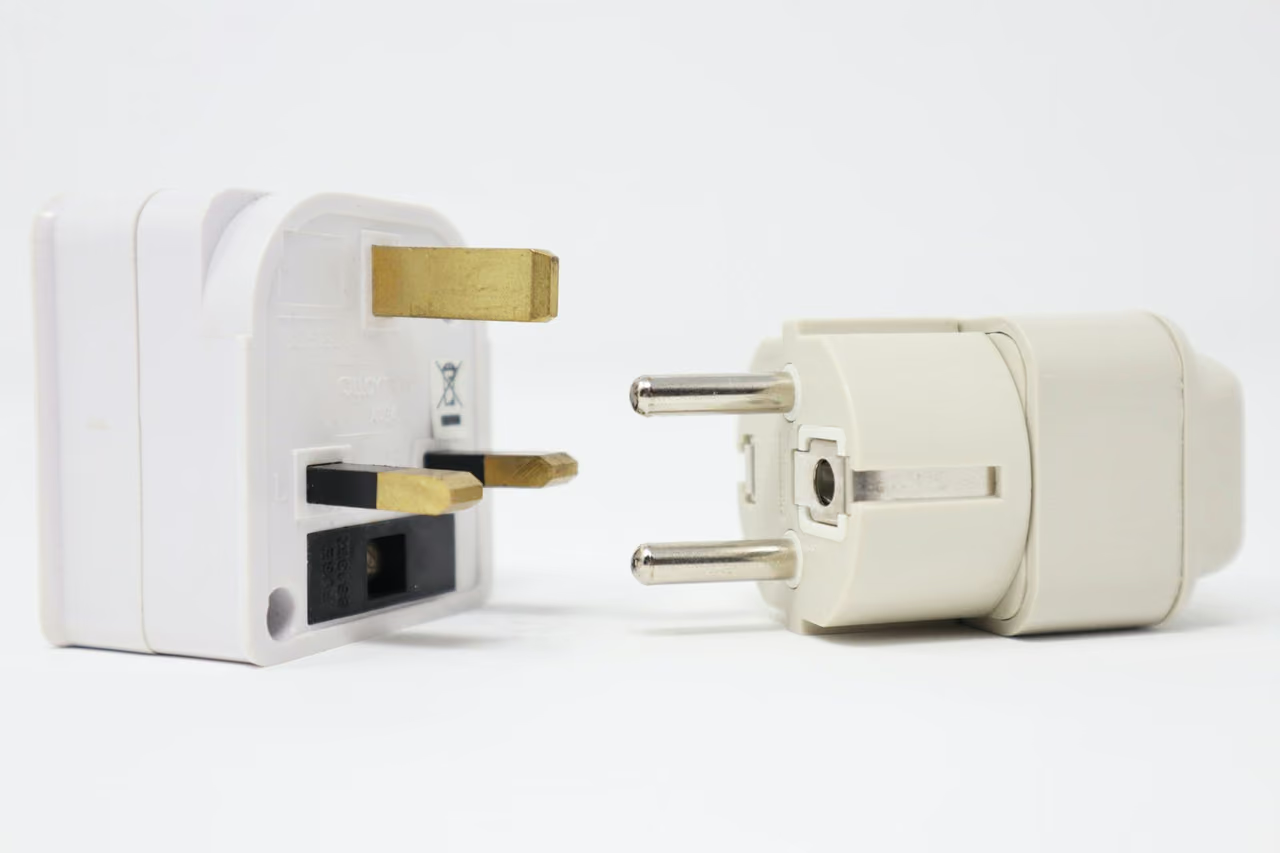
- Fix the label: importer name and postal address; for household electrical equipment, a UK plug or a correctly fitted conversion plug (regulation 35 of the 2016 Regulations).
- Plan Northern Ireland separately: CE, or CE plus UKNI, under EU rules for roles and labels.
Practical example: a U.S. grill maker with three products
A U.S. company sells three grills through a distributor in England, which imports them and also supplies retailers in Northern Ireland:
| Product | Rules | Great Britain | Northern Ireland |
|---|---|---|---|
| Electric grill | Low voltage, EMC and RoHS; self-declared | CE accepted; importer's name and address on the grill; UK plug | CE |
| Gas grill | Gas appliances; notified body always involved (Art. 14 Regulation (EU) 2016/426) | CE or UKCA with an EU notified body; UKCA only with a UK Approved Body | CE with an EU notified body; CE plus UKNI with a notified body based in the UK |
| Charcoal grill | No CE legislation | No conformity marking; General Product Safety Regulations 2005 | No CE; EU General Product Safety Regulation |
With an EU notified body certificate for the gas grill, the CE marking works in all three markets. With a UK Approved Body, the company would need a second certificate for the EU and Northern Ireland.
Common mistakes with UKCA and CE
- Relabeling everything to UKCA. For most regulated products, CE is enough in Great Britain.
- Using a UK Approved Body certificate for the EU. It supports UKCA only.
- Printing UKCA or UKNI alone for Northern Ireland. Only CE, or CE plus UKNI, works there.
- Reading "no end date" as "forever". UKCA can become mandatory regulation by regulation.
Conclusion: keep CE, check the exceptions
For most products, the CE marking remains your route into Great Britain and Northern Ireland; check who certifies and note 20 January 2027 for machinery and 31 December 2027 for labels. For the local roles, see our EU and UK market entry checklist and UK Responsible Person: when you need one.
We also cover the United Kingdom: UKCA marking support belongs to our Compliance pillar. For the EU side, our CE marking support works within the agreed scope and mandate; you remain the manufacturer and responsible for your product.
Frequently asked questions
Is the CE marking still accepted in Great Britain?
For most regulated products, yes. Since 1 October 2024, SI 2024/696 has removed the end date for recognizing EU requirements under 21 sets of product regulations, so CE stays accepted for electrical equipment, radio equipment, toys, machinery and most other sectors. Medical devices, construction products and sectors with their own British marks follow separate rules.
When is UKCA marking mandatory?
When a UK Approved Body carries out a mandatory third-party assessment, because its certificates support UKCA only, and where a sector is not or no longer recognized, such as medical devices after 30 June 2028 or 30 June 2030 at the latest. The 2024 rules are also designed so that UKCA could become mandatory for individual regulations later.
Is UKCA valid in Northern Ireland?
No. Northern Ireland follows EU product rules under the Windsor Framework and requires CE, or CE plus UKNI where a notified body based in the UK has assessed the product. UKNI is never used alone, and the certificates behind it are valid only in Northern Ireland, not in the EU.
Can CE-marked machinery be sold in Great Britain after 20 January 2027?
Yes, if it meets the Machinery Regulation (EU) 2023/1230 and the British conditions of SI 2026/867, such as an EU declaration of conformity and technical documentation in English. Machinery placed on the market before 20 January 2027 under the old rules may still be made available.
Can a product carry both UKCA and CE?
Yes, if it meets the requirements behind both markings and each stays clearly visible, according to the UK government's guidance. In the EU, other markings are allowed as long as they do not impair the visibility, legibility and meaning of the CE marking (Article 30(5) Regulation (EC) No 765/2008).