
Does my product need CE marking? How to check

10 min read
Does your product need CE marking? Check it against the EU acts that require it, see what applies if none does, and why a voluntary CE mark is not allowed.
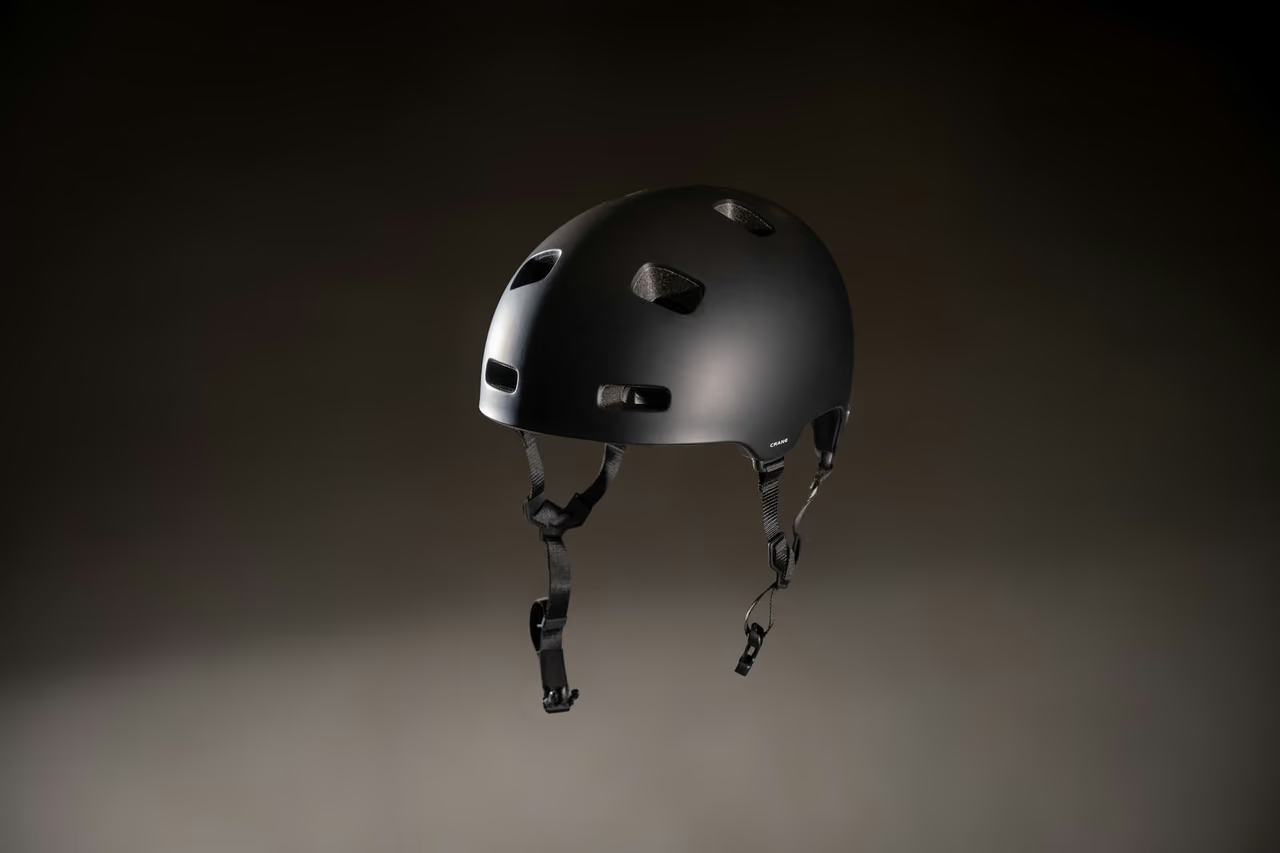
You make products outside the EU, say a camping chair, a bicycle helmet and wireless earbuds, and an EU distributor asks for your CE certificate. Does your product need CE marking at all? Only if an EU act providing for CE marking covers it; then the marking is mandatory. If no such act covers it, CE marking is not allowed, and consumer products fall under the General Product Safety Regulation (EU) 2023/988 (GPSR) instead. Here is how to check.
What CE marking means, and what it does not
With CE marking, the manufacturer indicates that a product conforms to the requirements of the EU legislation providing for its affixing (Article 2(20) of Regulation (EC) No 765/2008 (opens in a new tab)) and takes responsibility for that conformity (Article 30(3)). Only the manufacturer or its Authorized Representative may affix it (Article 30(1)).
It is not an approval, and there is no general CE certificate. According to the Commission, CE marking does not mean that an authority has approved the product as safe, nor where it was made (Commission, CE marking (opens in a new tab)). The manufacturer declares conformity itself; a notified body, an independent organization designated by a member state, takes part only where the act requires it (guidance for manufacturers (opens in a new tab)).
The rule: CE marking where an act requires it, nowhere else
Article 30(2) of Regulation (EC) No 765/2008 sets both sides: CE marking is affixed only to products for which specific EU legislation provides for it, and not to any other product.
Within the scope of CE legislation, the Blue Guide 2022 (opens in a new tab), the Commission's guide to EU product rules, says the marking belongs on new products, on used products imported from outside the EU and on products modified so much that they count as new (section 4.5.1.6). Some acts exempt certain products: partly completed machinery, for example, comes with a declaration of incorporation instead.
Which EU acts require CE marking
Each act defines its own scope, and checking it is the manufacturer's job (Blue Guide 2022, section 2.1). The main acts as of 5 October 2026:
| Product group | EU act | Watch for |
|---|---|---|
| Electrical equipment, 50 to 1,000 V AC or 75 to 1,500 V DC | Low Voltage Directive 2014/35/EU (Articles 1, 6(2)) | Exclusions in Annex II, such as domestic plugs and sockets |
| Apparatus that can cause or suffer electromagnetic disturbance | Electromagnetic Compatibility (EMC) Directive 2014/30/EU (Articles 3, 7(2)) | No voltage range; inherently benign equipment excluded (Article 2(2)(d)) |
| Electrical and electronic equipment | RoHS Directive 2011/65/EU on hazardous substances (Articles 2, 7(c)) | Substance limits; see RoHS compliance |
| Products that intentionally emit or receive radio waves | Radio Equipment Directive 2014/53/EU (Articles 2(1), 10(3)) | Applies instead of the Low Voltage Directive, covers EMC (Articles 1(4), 3(1)); cybersecurity for some devices since 1 August 2025 |
| Toys for children under 14 | Directive 2009/48/EC (Articles 2(1), 4(2)); Regulation (EU) 2025/2509 from 1 August 2030 | Annex I lists non-toys; see Is it a toy? |
| Machinery and related products, such as safety components | Directive 2006/42/EC (Article 5(1)); Regulation (EU) 2023/1230 from 20 January 2027 | See the Machinery Regulation checklist |
| Personal protective equipment (PPE) | Regulation (EU) 2016/425 (Articles 2, 8(2)) | Notified body from risk category II (Article 19) |
| Appliances burning gaseous fuels, and their fittings | Regulation (EU) 2016/426 (Articles 2, 7(2)) | Notified body always involved (Article 14) |
| Pressure equipment above 0.5 bar; equipment for explosive atmospheres (ATEX) | Directives 2014/68/EU and 2014/34/EU | No CE marking on sound engineering practice items (Article 4(3), 2014/68/EU) or ATEX components (Article 6(2), 2014/34/EU); see pressure equipment and ATEX |
| Batteries, also when built into products | Regulation (EU) 2023/1542 (Articles 1(3), 20, 38(3)) | CE marking since 18 August 2024, when the conformity assessment rules took effect (Articles 17, 96(2)(b)) |
| Hardware and software with a data connection | Cyber Resilience Act (EU) 2024/2847 (Articles 2(1), 13(12)) | Applies from 11 December 2027 (Article 71(2)) |
Further acts with CE marking cover, for example, lifts, measuring instruments, recreational craft, pyrotechnics, drones, medical devices and specific ecodesign product groups such as electric motors. Construction products covered by a harmonized standard or a European Technical Assessment carry CE marking based on a declaration of performance (Articles 4(1), 8(2) of Regulation (EU) No 305/2011); Regulation (EU) 2024/3110 takes over product family by product family (Article 95(9)).
How to check your product in six steps
- Describe the product as sold: function, voltage, radio, batteries, software and connectivity, intended users.
- Read the scope article of each candidate act, with its definitions and exclusions.
- Resolve overlaps: radio equipment, for example, falls under the Radio Equipment Directive instead of the Low Voltage Directive (Article 1(4) of Directive 2014/53/EU; Blue Guide 2022, section 2.7).
- Check the dates: each unit must meet the rules in force when it is placed on the market (Blue Guide 2022, section 2.3).
- If an act applies, complete the conformity assessment, technical documentation and one EU Declaration of Conformity, then affix the CE marking. For the acts in Article 4(5) of Regulation (EU) 2019/1020, an economic operator in the EU must be responsible for the product.
- If none applies, leave the CE marking off, follow the GPSR for consumer products and record your reasoning.
No CE legislation: what applies instead
For consumer products without CE legislation or other sector-specific EU safety rules, the GPSR applies in full (Article 2(1) GPSR (opens in a new tab)); the Commission's GPSR guidelines name childcare articles, gymnastic equipment and furniture (C/2025/6233, point 2.2). You carry out a risk analysis and draw up technical documentation (Article 9(2)), and an economic operator in the EU, the Responsible Person, must be responsible for the product (Article 16(1)).
The GPSR is also a safety net for CE products: it covers risks the sector act leaves open (Article 2(1)), and its rules on online offers and accident notifications apply to CE-marked consumer products too (guidelines, point 2.2).
Several acts at once: one marking, one declaration
A product may only be placed on the market once it complies with every act that applies (Blue Guide 2022, section 2.7). One CE marking then declares conformity with all of them (section 4.5.1.6), and one EU Declaration of Conformity names each act with its Official Journal reference (for example Article 18(3) of Directive 2014/53/EU).
Where notified bodies take part in production control under several acts, each identification number follows the CE marking (section 4.5.1.5). See also who signs the EU Declaration of Conformity.
Edge cases: spare parts, kits, B2B products and radio
- Spare parts. A repair with an identical or similar part needs no new conformity assessment (Blue Guide 2022, section 2.1). A part sold separately needs CE marking only where an act treats it as a finished product; machinery safety components do, unless they replace identical components and come from the original machine's manufacturer (Article 1(2)(a) of Directive 2006/42/EC; Article 2(2)(a) of Regulation (EU) 2023/1230).
- Kits and sets. If you place all parts of a kit on the market, the product counts as ready for use (Blue Guide 2022, section 2.8), and a combination you put together can be one finished product that must comply as a whole; CE-marked components alone do not guarantee that (section 2.1).
- B2B products. CE legislation covers professional and consumer end users alike (section 3.8), so an industrial machine needs CE marking although no consumer sees it; only the GPSR is limited to consumer products.
- Products with radio. An electrical or electronic product that intentionally emits or receives radio waves for communication or radiodetermination, such as positioning, is radio equipment (Article 2(1) of Directive 2014/53/EU). A Bluetooth module moves a mains-powered device from the Low Voltage Directive to the Radio Equipment Directive.
Practical example: a Canadian outdoor brand
A Canadian brand plans to sell three products to EU consumers online:
| Product | CE legislation | Result |
|---|---|---|
| Folding camping chair | None | No CE marking; GPSR in full, with a Responsible Person (Article 16 GPSR) |
| Bicycle helmet | PPE Regulation, risk category II (Annex I) | EU type-examination by a notified body, then declaration and CE marking (Article 19(b)) |
| Wireless earbuds | Radio Equipment Directive, RoHS; batteries under Regulation (EU) 2023/1542 | One declaration for both directives, USB-C port (Annex Ia, point 1.12, Directive 2014/53/EU), CE-marked batteries |
The brand declined its factory's offer to print a CE logo on the chair's carton, which would breach Article 30(2) of Regulation (EC) No 765/2008.
The PPE Regulation, the Radio Equipment Directive and RoHS are listed in Article 4(5) of Regulation (EU) 2019/1020, so the helmet and the earbuds need an economic operator in the EU, named on the product, packaging, parcel or an accompanying document (Article 4(4)). One EU business can also be the chair's Responsible Person if its written mandate covers all three products.
Common mistakes when deciding on CE marking
- Adding CE marking to be safe. It is prohibited without an act providing for it (Article 30(2) of Regulation (EC) No 765/2008).
- Asking a lab for a CE certificate. Test reports support your technical documentation; the marking rests on your own declaration.
- Checking one act only. A desk lamp tested for electrical safety still needs EMC and RoHS checks (Blue Guide 2022, section 2.7).
- Missing a change of rules. Machinery placed on the market from 20 January 2027 must meet Regulation (EU) 2023/1230, even if the model was sold before.
Conclusion: scope first, then the file
Does your product need CE marking? Answer it with the scope articles of the acts above before you test, label or list anything, record why, and check again when you add a radio module or a battery. Selling in Great Britain too? See UKCA or CE marking.
Our CE marking service identifies the directives and harmonized standards for your product, coordinates testing and risk assessment and reviews your technical documentation. For products without CE marking, we can act as your GPSR Responsible Person, within the agreed scope and mandate; the product remains your responsibility as manufacturer.
Frequently asked questions
Is CE marking mandatory for every product sold in the EU?
No. CE marking is mandatory only for products covered by an EU act that provides for it, such as the Low Voltage, Radio Equipment or Toy Safety Directive, and it must not be affixed to any other product (Article 30(2) of Regulation (EC) No 765/2008). Consumer products without such an act fall under the GPSR.
Can I add CE marking voluntarily to be on the safe side?
No. Article 30(2) of Regulation (EC) No 765/2008 prohibits CE marking on products that no act providing for it covers. The Commission's Blue Guide considers such marking deceptive, and member states must act against improper use of the marking (Article 30(6)).
Who issues the CE certificate?
EU law does not provide for a general CE certificate. The manufacturer affixes the CE marking after the conformity assessment and declares conformity in the EU Declaration of Conformity. Certificates come from notified bodies only where an act requires them, for example the EU type-examination certificate for category II protective equipment (Article 19 of Regulation (EU) 2016/425).
Does my product need CE marking if I only sell to businesses?
Yes, if an act providing for CE marking covers it. CE legislation applies to products for professional and consumer end users alike (Blue Guide 2022, section 3.8). Only the GPSR is limited to consumer products.
Is CE marking accepted in the UK?
In Great Britain, the UK government continues to recognize CE marking for many product types, alongside or instead of UKCA marking, the British conformity marking, according to its guidance on placing UKCA or CE marked products on the market. In Northern Ireland, products are placed on the market with CE marking, or CE and UKNI marking.